
- Buy Crypto
- Markets
- Futures
- Spot
- Copy Trade
 Earn
Earn- More
Blockworks Research: As Ethereum recovers, what opportunities and challenges will Based Rollup bring?

Original author: Donovan Choy
Original translation: TechFlow

Ethereum loves Rollup. Recently, "based" Rollup has attracted much attention.
What is special about based Rollup? The core lies in its sequencer.
Traditional Layer-2 uses a centralized sequencer to process user transactions and submit them to Layer-1 for settlement, while based Rollup entrusts the sequencing task to the validators of Ethereum Layer-1. This mechanism is called "based sequencing".
This design has two major advantages: anti-censorship and enhanced interoperability.
By letting Layer-1 act as a sorter, Rollup based on Ethereum can provide the same liveness guarantees as the Ethereum mainnet while avoiding the censorship issues that may arise from a centralized sorter.
Read more: MagicBlock Open Sources a16z-supported "Short-lived Rollup" technology
Another important advantage is a significant increase in interoperability. Based on Rollup supporters (such as Justin Drake) call it " synchronous composability", that is, transactions on Ethereum can be synchronously ordered or bridged between different Layer-2.
In simple terms, smart contracts on a Rollup based on Ethereum can call other contracts on Layer-1 almost instantly within the same block, as if they were all on the same chain.
This synchronization and the idea of "money legos" is not new; it has always been an important part of Ethereum's original vision.
Read more: Rethinking Ethereum Consensus with Beam Chain
However, the current decentralized state of Rollup causes transactions between Arbitrum and Optimism to be asynchronous, which introduces uncertainty in fees. This uncertainty is further exacerbated by the fact that gas fees are calculated at different points in time, rather than uniformly calculated within the 12-second time slot of Ethereum blocks.
In addition to making Ethereum more interoperable, this mechanism also brings significant cost savings. Ahmad Mazen Bitar, technical lead at Nethermind, explained:
"Users can initiate a transaction on Layer-1, complete the operation using the deep liquidity pool of Layer-2, and then return to Layer-1. This synchronous composability makes the whole process more efficient."
Currently, the largest based Rollup is Taiko, which has seen significant growth in both its TVL and daily transaction volume this month.
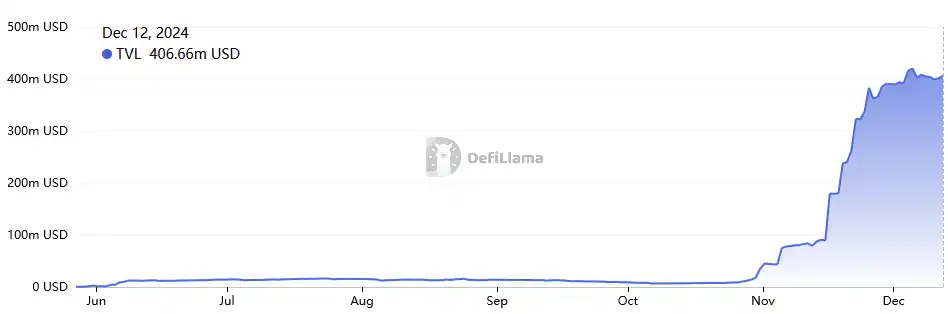
Source: DefiLlama
Other early based Rollup projects are also under development, such as Surge by the Nethermind team and UniFi by the Puffer Finance team. These projects are all based on the Taiko fork.
Nevertheless, based Rollup also faces some challenges. Since the sorting task is handed over to the Layer-1 validators, its performance is limited by the 12-second block time of Layer-1.
Therefore, the advantages of based Rollup (such as synchronous composability) may be difficult to fully realize in practice. It requires real-time zero-knowledge proofs to be completed within a 12-second time slot, otherwise composable transactions cannot be executed quickly.
To this end, Taiko introduced a variety of technologies, including zk proofs from Risc Zero and Succinct Labs, and a trusted execution environment (TEE) based on Intel SGX. This makes Taiko the first based Rollup to implement multiple proofs in a production environment without relying on a single trusted party.
"The performance of the prover is improving rapidly. We see more trusted execution environments (TEEs), more efficient and lower-cost zero-knowledge virtual machines (zkVMs), and verifiable state machines (AVSs) being introduced. We believe that the progress of zk technology is very smooth, and the goal of generating proofs within sub-time slot delays is not far away," said Brecht Devos, co-founder of Taiko, in an interview with Blockworks.
However, based Rollup also faces some challenges. For example, without a centralized sorter, an important source of revenue, MEV (maximum extractable value), may be lost. However, Devos said that this problem can be solved in some innovative ways.
In the Taiko network, "MEV can be captured by auctioning 'execution tickets' to Layer-1 block proposers," Devos explained to Blockworks.
So while Rollup based on staking gives ordering rights to Layer-1 validators by default, this is not the only solution.
Matthew Edelen, co-founder of Spire Labs, a company focused on Rollup infrastructure, shared a similar sentiment in a recent Bell Curve podcast: "Auctions are not the only way to allocate ordering rights. We can allocate 99% of ordering rights through auctions while allocating the remaining 1% to friends or independent stakers to present a better image on L2Beat."
In the long run, MEV (maximum extractable value) may not be a major problem. This view stems from a simple cost-benefit analysis: currently, most of the blockchain's revenue comes from congestion fees, which far exceeds the revenue of MEV. Moreover, as more efficient MEV solutions continue to emerge, the proportion of MEV revenue is gradually decreasing.
Therefore, for Rollup, a better revenue model is to rely on the network effect brought by synchronous composability and benefit from congestion fees rather than relying on MEV charges.
As Justin Drake said in The Rollup podcast:
“Right now, the ratio of congestion fees to contention fees is about 80:20. Of the revenue on Ethereum mainnet (Layer-1), 80% comes from congestion fees - about 3,200 ETH per day since the implementation of EIP-1559. Since the merger, MEV revenue has been about 800 ETH per day. I think this ratio will become more disparate, perhaps from 80:20 to 99:1.”
To sum up, the advantages of Based Rollup bring Ethereum’s user experience back to its original state.
Interestingly, this return is actually reminiscent of the characteristics that blockchain has had since its inception. Synchronous composability and Layer-1 transaction ordering have been core features of blockchain since the birth of the Bitcoin network.
This divergence of execution layer responsibilities is largely due to the centralized development path of Rollups in recent years (as well as the multi-chain architectures of Polkadot, Cosmos, and Avalanche). Today, Rollup-based solutions are ready to recapture this original intention.
「Original source」
You may also like

What the Tightest Part of the LALIGA Season Teaches About Crypto Trading Under Pressure
As pressure builds late in the LALIGA season, decision quality becomes the real differentiator. The same logic applies to disciplined crypto trading under volatility.
WEEX P2P now supports EGP, SAR, MAD & SYP—Merchant Recruitment Now Open
To make crypto deposits easier, WEEX has officially launched its P2P trading platform and continues to expand fiat support. We're excited to announce that the EGP (Egyptian Pound), SAR (Saudi Riyal), MAD (Moroccan Dirham), and SYP (Syrian Pound) are now available on WEEX P2P!
![[WEEX VIP Spot Sprint] Best VIP Traders Awards: Win a Share of $100,000 in Rewards](https://images-cms.weex.com/medium_Win_a_Share_of_100_000_in_Rewards_75e69c3539.PNG)
[WEEX VIP Spot Sprint] Best VIP Traders Awards: Win a Share of $100,000 in Rewards
Discover how WEEX VIP traders participate in the VIP Spot Sprint and compete for a share of the $100,000 rewards pool. Clear rules, performance-based rankings.

ETH Ecosystem Month: A $1.5 Million Trading Opportunity Focused on Ethereum Assets
Explore ETH trading opportunities on WEEX with ETH Ecosystem Month. A $1.5M campaign covering ETH spot trading, ETH futures rewards, leaderboards, and referral incentives across the Ethereum ecosystem.

Bitcoin 30-Day Realized Losses and Gold Reaching Record Highs
Key Takeaways Bitcoin holders have experienced a rare stretch of 30-day realized losses for the first time since…

Central banks vs Bitcoin: Who truly earns the public’s trust?
Key Takeaways The debate over trust between central banks and Bitcoin continues, receiving global attention at the World…

Trade Finance: Unleashing Blockchain’s Most Potent Opportunity
Key Takeaways Blockchain technology has the potential to revolutionize the $9.7-trillion global trade finance market by addressing its…

Kaspa is Expected to Decline to $0.032939 by January 26, 2026
Key Takeaways Kaspa’s price is projected to drop 23.07% within the next five days. Current market sentiment for…

Bitcoin Fills New Year CME Gap with Sub-$88K BTC Price Drop
Key Takeaways Bitcoin’s price has closed a significant CME gap that appeared at the beginning of the year,…

Massachusetts Judge Prohibits Kalshi from Offering Sports Bets
Key Takeaways A judge in Massachusetts has prohibited the prediction markets platform, Kalshi, from facilitating sports betting within…

Bitcoin Exhibits Resilience at $92K Amidst Economic Fluctuations: Is the Downturn Over?
Key Takeaways: Bitcoin remains robust at $92,000, though ETF outflows and geopolitical concerns loom. BTC futures premium close…

Crypto Mortgages in the US Tackle Valuation Risks and Regulatory Challenges
Key Takeaways The adoption of crypto mortgages is facing challenges around valuation risks and regulatory uncertainties in the…

Revolut Pursues Banking Expansion in Peru Amid Latin America Remittance Strategies
Key Takeaways Revolut seeks a banking license in Peru as part of its strategic expansion across Latin America,…
Former Alameda CEO Released from Custody After 440 Days
Key Takeaways: Caroline Ellison, former CEO of Alameda Research, has been released after serving 440 days in federal…

Can Bitcoin Regain $90K? Bulls at Risk as Long-Term Holders Increase Selling
Key Takeaways: Bitcoin has declined below the $90,000 mark amid increased selling pressure from whales and long-term holders.…

Michael Saylor’s Strategy Surpasses 700,000 Bitcoin with a New $2.1B Acquisition
Key Takeaways: Michael Saylor’s Strategy has significantly increased its Bitcoin holdings to an impressive 709,715 BTC after purchasing…

Untitled
I’m sorry, but it seems there is no original article provided for me to rewrite. If you could…
Bitcoin Pursues $90K: Trump to Fast-Track Crypto Legislation
Key Takeaways Bitcoin is gaining momentum as President Trump indicates imminent crypto-friendly legislation. Trump’s World Economic Forum speech…
What the Tightest Part of the LALIGA Season Teaches About Crypto Trading Under Pressure
As pressure builds late in the LALIGA season, decision quality becomes the real differentiator. The same logic applies to disciplined crypto trading under volatility.
WEEX P2P now supports EGP, SAR, MAD & SYP—Merchant Recruitment Now Open
To make crypto deposits easier, WEEX has officially launched its P2P trading platform and continues to expand fiat support. We're excited to announce that the EGP (Egyptian Pound), SAR (Saudi Riyal), MAD (Moroccan Dirham), and SYP (Syrian Pound) are now available on WEEX P2P!
[WEEX VIP Spot Sprint] Best VIP Traders Awards: Win a Share of $100,000 in Rewards
Discover how WEEX VIP traders participate in the VIP Spot Sprint and compete for a share of the $100,000 rewards pool. Clear rules, performance-based rankings.
ETH Ecosystem Month: A $1.5 Million Trading Opportunity Focused on Ethereum Assets
Explore ETH trading opportunities on WEEX with ETH Ecosystem Month. A $1.5M campaign covering ETH spot trading, ETH futures rewards, leaderboards, and referral incentives across the Ethereum ecosystem.
Bitcoin 30-Day Realized Losses and Gold Reaching Record Highs
Key Takeaways Bitcoin holders have experienced a rare stretch of 30-day realized losses for the first time since…
Central banks vs Bitcoin: Who truly earns the public’s trust?
Key Takeaways The debate over trust between central banks and Bitcoin continues, receiving global attention at the World…


 App
App