
Figma's stock price drops over 7%, will Claude Design be the terminator?


Original Title: "Is Anthropic About to Kill Figma?"
Original Author: Dance Dance Forest, Geek Park
From selling models to building products, Anthropic has taken a step that was faster than anyone expected.
In 2010, a small company called Instagram was acquired by Facebook for $1 billion. Many people at the time didn't understand why they would spend so much money on a filter app. The later story is well known—Facebook wasn't buying a product but a species that could threaten itself, and incidentally turning it into its weapon.
Mike Krieger, the co-founder who helped Instagram grow from zero to hundreds of millions of users, joined the thriving Anthropic in May 2024 as Chief Product Officer.
On April 14, 2026, this Krieger resigned from the Figma board. Three days later, Anthropic announced the release of Claude Design.
This timing doesn't seem like a coincidence.
01 Between the Three Days, the Industry Landscape Changed
Figma's stock price dropped by over 7% on that day, from $20.32 to $18.84. Market reactions are always more honest than press releases.
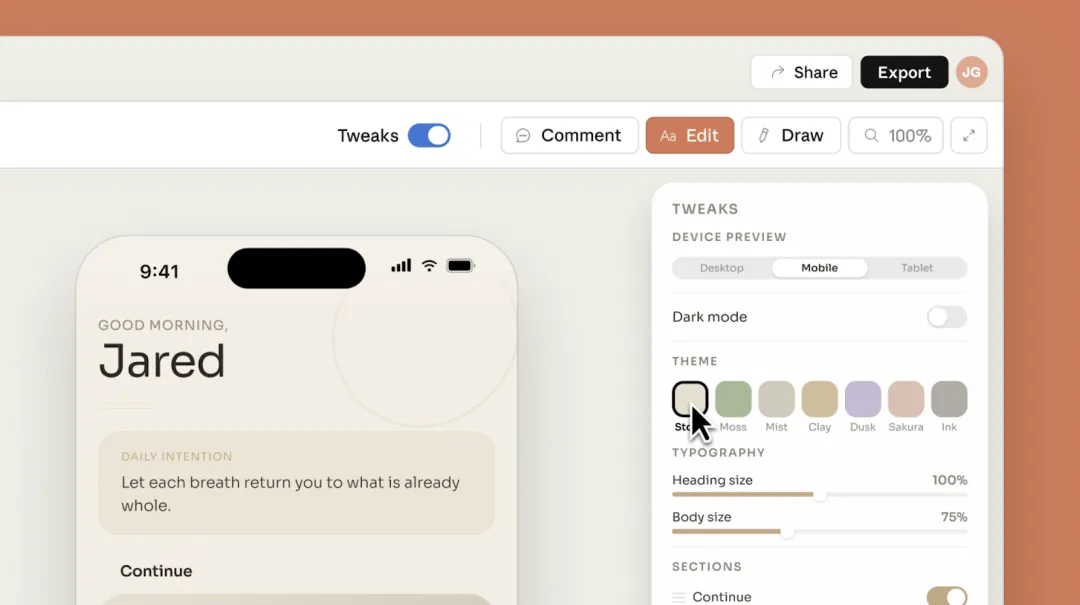
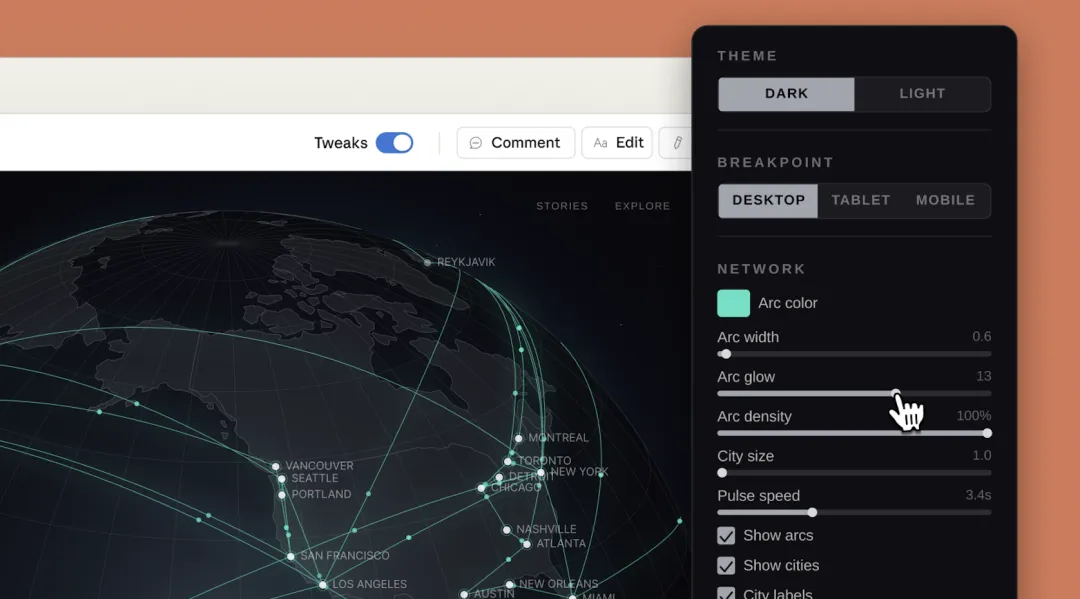
Claude Design is an experimental product, powered by Anthropic's latest flagship model, Opus 4.7, from the internal Anthropic Labs team. What can it do? Prototypes, slides, one-page summaries, and various visual content—exactly what designers and product managers open Figma or Canva to do every day.
But if Claude Design is seen merely as "another AI design tool," the significance of this matter is underestimated.
What truly caught the industry's attention is the "handover" mechanism between Claude Design and Claude Code.
Claude Design Page | Image Source: Anthropic
When you finish a UI prototype with Claude Design, the system will automatically package the complete design specifications into a "handoff package," which can be directly passed to Claude Code for further development.
More importantly, when Claude Design is enabled, it reads your codebase and existing design files, automatically creating a design system tailored to your team—font, color, layout standards, brand governance rules, all read once and applied throughout.
Developers on Reddit commented that this solves the "most annoying part" of using AI for design tools—having to explain your brand specifications to AI again for each new project.
From design to development, it used to be two tools, two workflows, two sets of people. Now Anthropic wants to turn this process into a closed loop.
02 Clear Strategic Cadence
If you look at the recent timeline with Claude Design, you will see a faster-paced Anthropic.
In early April, Anthropic announced the limited release of Claude Mythos Preview. This model can discover and exploit vulnerabilities hidden in critical software systems for decades, with such high security risks that the company decided not to open it to the public—instead, in the form of "Project Glasswing," providing selective access to over 50 top institutions such as Amazon, Apple, Microsoft, Google, JPMorgan Chase, etc., each with a complimentary $100 million user credit limit, specifically for defensive cybersecurity research.
On April 14, Opus 4.7 was officially released, bringing enhanced coding capabilities, clearer visual understanding, and new "self-check" abilities. Anthropic itself admits that the performance of Opus 4.7 is not as good as Mythos—but Mythos has not been publicly released for security reasons.
On April 17, CEO Dario Amodei met with White House officials, with the topic being cybersecurity concerns raised by the Mythos model. On the same day, Claude Design was released.
Also on April 17, foreign media reported that Anthropic's valuation had reached $800 billion and was in early discussions with Goldman Sachs, JPMorgan Chase, and Morgan Stanley for a possible IPO as early as October this year.
This is no longer a "model-selling company." This is a company preparing to go public, needing to articulate to the capital market "why we are worth this price," systematically completing its product matrix.
From disrupting the developer tools market with Claude Code to entering the design workflow with Claude Design, Anthropic's strategy is very clear: identify tools used frequently by professionals every day, redo them in an AI-native way, and then use "model capability" as a moat to make it difficult for competitors to catch up.
03 Challenging Figma, but Facing Reality
However, there is often a gap between the ideal closed loop and actual use.
Some reviewers found that after experiencing Claude Design, simply building a design system, setting up a prototype website, and making a few adjustments had already consumed over 50% of their weekly quota. Beyond the quota, additional token fees are required. For design scenarios that require frequent iterations, this cost pressure is significant.
There are also noticeable bugs at present, such as the design system preview sandbox being unable to correctly read image files, resulting in broken image links.
At its current stage, Claude Design is more like an accelerator for internal demos and rapid prototyping, rather than a production-level design tool that can be delivered directly.
Claude Design Page | Image Source: Anthropic
This also means that Canva and Figma are not without recourse. Figma has accumulated years of moat in collaboration features, meticulous design system management, and the workflow of professional designers; Canva's strength lies in its template ecosystem and the user-friendliness for non-professional users. In the short term, production-level content still requires manual fine-tuning.
But the term "short term" is becoming shorter and shorter in the field of AI.
Anthropic's true ambition this time may not be to directly replace Figma, but to redefine "who is Figma's target user." When an independent developer, a small team's product manager, or an entrepreneur who needs to quickly create a demo can use Claude Design to build a "good enough" prototype in minutes and seamlessly hand it over to Claude Code for implementation, do they still need to take the time to learn Figma?
This may be the real reason Figma's stock price dropped by 7%.
04 From Selling Shovels to Mining
There is a long-standing metaphor in Silicon Valley that during a gold rush, the ones who make the most money are not the gold miners, but the ones who sell shovels. In the early days of the AI wave, OpenAI and Anthropic played the role of the "shovel sellers"—providing APIs for developers and businesses to build applications.
However, now Anthropic has started mining itself.
Claude Code, Claude Design—these are two shovels, as well as two entry points that capture users' time. As Anthropic directly ventures into developer tools and design tools, its relationship with ecosystem companies that once built products based on its API has shifted from "partners" to "competitors."
This path has been trodden by Microsoft, Google, and most decisively, Apple. The difference is that those companies first had a platform before applications, while Anthropic initially gained trust through model performance and then used this trust to permeate the upstream application layer.
Mike Krieger turned Instagram into a platform years ago, only to witness Facebook later use this platform to suppress competitors. Two years ago, he joined Anthropic to start working on products.
History does not merely repeat itself, but sometimes, participants do.
Anthropic's IPO could potentially land as early as October this year. Before that, it will probably "release" a few more times to make it clear to the capital market what this company really aims to be.
Original Article Link
You may also like

The encrypted unicorn Blockstream is deeply embroiled in a serious fraud case

How xBubble Breaks the Deadlock in VC's Heavy Investment in the OPC Economy

Dragonfly partner Haseeb: The fastest-growing companies in the future may all be stuck at 149 people

Morning Report | Former Ethereum Foundation researcher establishes Ethlabs; EU Parliament Economic Committee passes digital euro regulatory proposal

Interview with NDV Founder Jason Huang: Popping the AI Bubble and the Myth of Microstrategy, Seeking the Ultimate Ace in the Crypto Market

Morning Report | The South Korean Financial Services Commission plans to expand the regulatory sandbox to include virtual assets; the parent company of the New York Stock Exchange, ICE, has reached a partnership with OKX to jointly establish a cryptocu...

Exclusive Interview with Strategy CEO: Putting Aside the Sale of 32 BTC, the 60 Trillion AI Intelligence is the Ultimate Fate of Bitcoin

TRON revitalizes the image of the bull, creating a more approachable brand character
Will the STRC issuance price discussed with ChatGPT really fall into a death spiral?

The foundation retreats, Ethlabs steps forward: Ethereum welcomes its largest restructuring in history

NYSE Parent ICE and OKX Launch Joint Venture: What It Means for Tokenized Stocks
ICE and OKX have announced a joint venture focused on tokenized stocks, but stock futures are already live across crypto markets. Here's what the partnership means, how stock futures work, and why traders are paying attention.

How to Trade Apple and Nvidia on a Crypto Exchange in 2026 (Without Buying Shares)
Morning Report | Secret Network loses $4.67 million due to cross-chain vulnerability; Michael Saylor releases Bitcoin Tracker information again, may disclose increased holdings data next week
Kalshi's biggest competitor is not Polymarket

The second half of the computing power battle: Intel CEO Pat Gelsinger reveals how AI is reshaping the global semiconductor supply chain
B.AI partners with MiniMax to launch a limited-time free experience of M3, enabling zero-threshold implementation of Agentic productivity through full-stack infrastructure

A company that was on the verge of bankruptcy has just surpassed Bitcoin in market value

The two giants are racing in "credit": loan balances of 9.9 billion vs 14.6 billion USD, Brazil has become the main battlefield
The encrypted unicorn Blockstream is deeply embroiled in a serious fraud case
How xBubble Breaks the Deadlock in VC's Heavy Investment in the OPC Economy
Dragonfly partner Haseeb: The fastest-growing companies in the future may all be stuck at 149 people
Morning Report | Former Ethereum Foundation researcher establishes Ethlabs; EU Parliament Economic Committee passes digital euro regulatory proposal
Interview with NDV Founder Jason Huang: Popping the AI Bubble and the Myth of Microstrategy, Seeking the Ultimate Ace in the Crypto Market
Morning Report | The South Korean Financial Services Commission plans to expand the regulatory sandbox to include virtual assets; the parent company of the New York Stock Exchange, ICE, has reached a partnership with OKX to jointly establish a cryptocu...


